



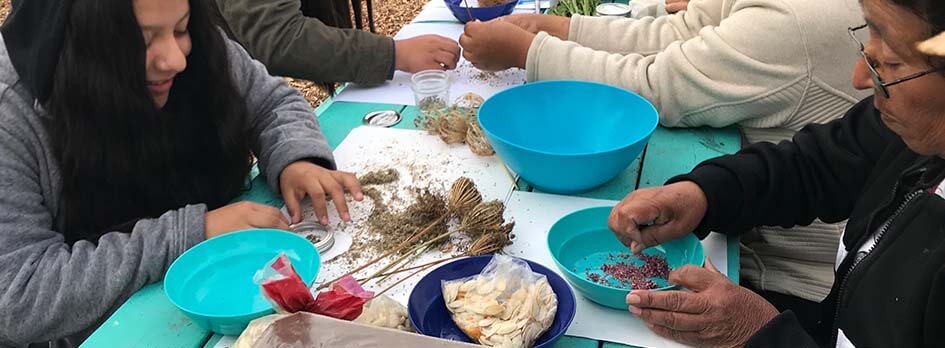


Growing Justice – Cultivando Justicia
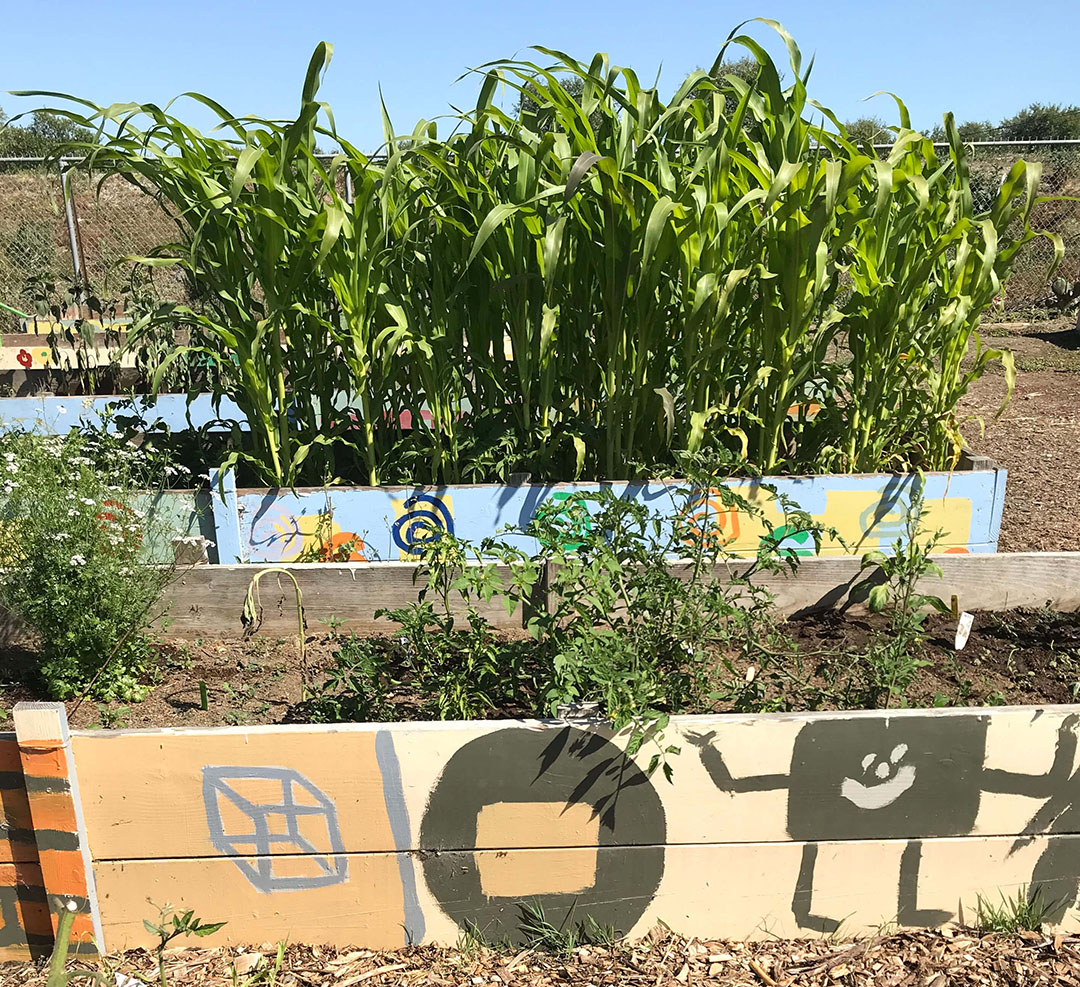
Urban community gardens have emerged to address hunger & diet-related health issues while building community.
Growing Justice (GJ)—Cultivando Justicia centers urban gardens to create a just food system for migrant farmworker families in the Pajaro Valley of the Central Coast of California. Despite their location in the agriculturally-rich Pajaro Valley, hunger is prevelant. Often, the very people who labor in the food system are unable to put enough healthy food on the table for their own families.
Urban community gardens involving low-income, primarily farm working families have emerged to address hunger & diet-related health issues while building community. GJ youth are the children of Latinx farmworker families and urban community gardeners. GJ youth conduct interviews and co-facilitate community gatherings as they explore their cultural roots related to farming, food, and land.
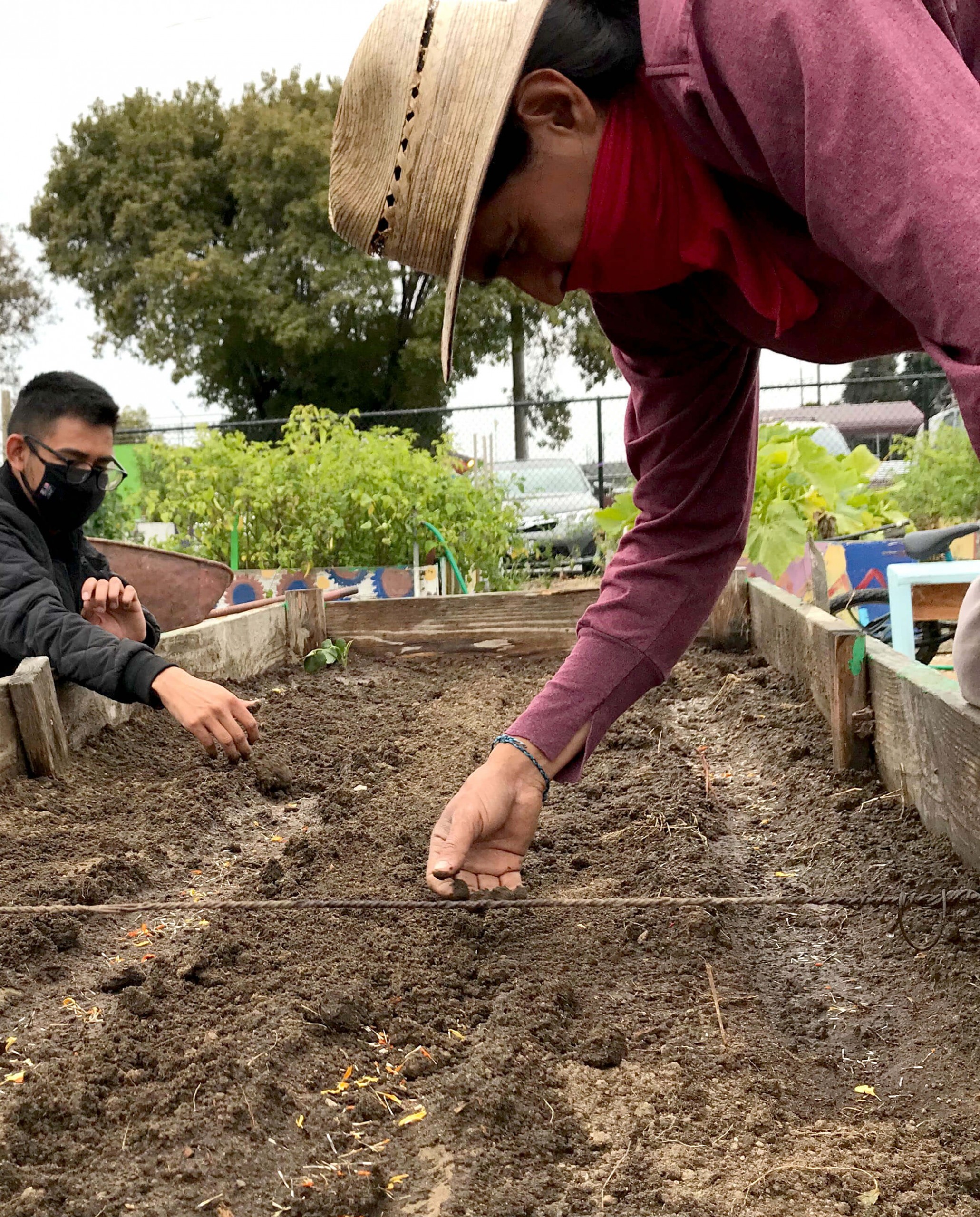
Efren, UCSC GJ youth volunteer, learning how to plant traditional flowers with Tierra Milperas community gardener Hugo.
Food is part of a complex cultural matrix braiding together community, identity, relationships, nature, and celebration. Growing Justice builds on this cultural matrix, recognizing that everyday practices of growing and eating culturally familiar food offer alternatives to industrial food systems. Latinx migrant farmworker communities have been dispossessed of their land and labor, undermining their capacity to continue these cultural practices. Their children and grandchildren grow up in the borderlands where access to ancestral and campesinx knowledge, seeds, and community lands, is continually violated. Recovering, producing, and documenting knowledge with youth builds collective power and community. CAN uses an intergenerational approach that centers youth in this process. Youth reconnect to their cultural identity and history, reconstituting their relationship to community and land.
“When I see a fruit that is not very common here, but it grows where I am from, I remember and this connects my roots to Mother Earth and nature.”
—Community Gardener interviewed by GJ Youth 2017
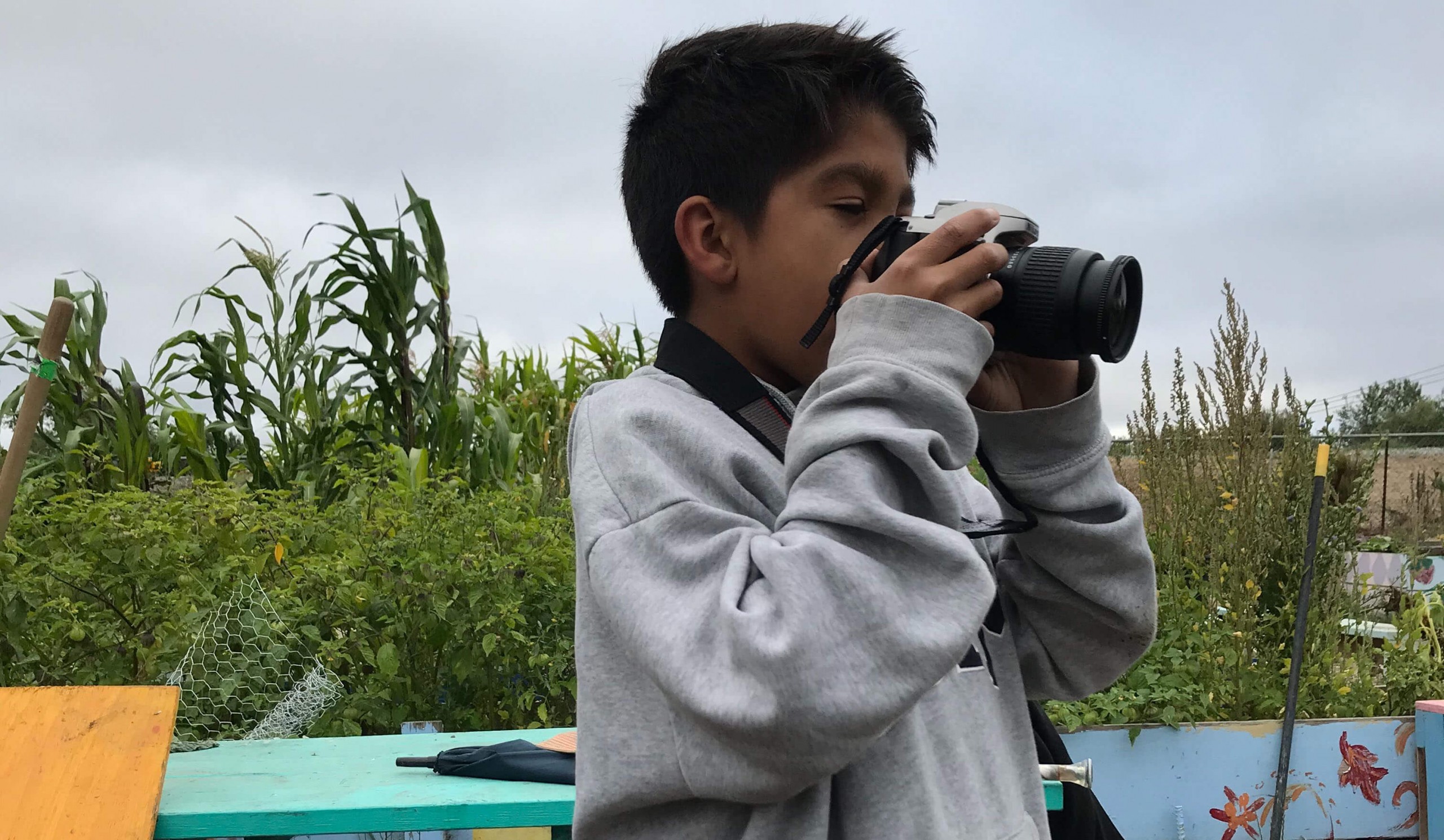
GJ youth documenting July 2020 planting.
CAN has partnered with Tierras Milperas, a group of 110 Latinx migrant farmworker families cultivating bio-culturally diverse milpas in seven community urban micro-farms. Tierras Milperas is connecting with the GJ Youth Team, to facilitate an intergenerational learning community to reconnect Latinx youth from farmworker families in Watsonville, California, to traditional agricultural knowledge and forms of social organization. The process of recuperating, producing, and documenting traditional agricultural knowledge by youth will support an intergenerational connection needed to transform the local food systems and work towards community food sovereignty.
Without this work, the low-wage agro-industrial food system will continue to dominate the economy, people, and landscape in Watsonville. Farmworker families will face hunger and diet-related disease, and soils, covered in strawberries, will be contaminated and degraded. Perhaps most critically, we risk losing our understanding and imagination of what is possible.
Objectives:
- Amplify young people’s challenges and aspirations as the next generation of food systems changers.

During the COVID pandemic, community gardeners started seedlings at home to transplant into the garden.
- Develop methodologies to recuperate, co-create, and document place-based and campesino agroecological knowledge and action.
- Reconnect and repower community organization through intergenerational dialogue to make possible systemic change in the food system.
How we do it:
- We achieve these objectives through methods that center collective reflection and action.
- We see ourselves as a learning community.
- We gather to exchange knowledge and practice, tell stories, share in the work of cultivation and enjoy the preparation, consumption, and celebration of healthy meals. This approach encourages experimentation, strengthens social organization, and allows for collective reflection to continually shape actions.
After three years of data collection, Growing Justice has transcribed multiple community narratives (testimonios) from farmworkers, community gardeners, youth, mothers, and family members. They creatively shared back knowledge and experiences these stories hold through a mobile art exhibit called “Wisdoms of the Ancestral Kitchen”. These share backs are key to youth led community building animating dialogue with the community at large on alternative solutions to the inequity and injustices faced in the agro-industrial food system of the Pajaro Valley.
Growing Justice youth and CAN facilitators collectively wrote, recorded, and edited an audio invitation for their community dialogue hosted in Mi Jardin Verde November 10, 2018. This promo sound aired in the Salinas station of Radio Bilingue on November 8-10, 2018. Hear it here: GJ Dialogos PROMO. Cultivando Justicia PROMO esp
River Park Community Garden documentary film
Watsonville, California
Winter 2016
CAN’s Growing Justice project was joined by UC Santa Cruz Professor Emily C. Cohen Ibanez‘ Visual Sociology Video Production Lab. Through this unique collaboration, UC Santa Cruz students, CAN staff and youth community researchers, Mesa Verde Gardens, and the urban gardeners of River Park Garden in Watsonville, California, produced a 20-minute collaboratively authored documentary project. The aim was to listen and to help the gardeners tell their stories of migration, food justice, urban belonging, and gardening.
• Measure the capacity of community gardens to provide a safe haven for community-building and family recreation
• Engage community members in making changes to their food access and food choices through a participatory action research approach
• Empower local youth (ages 14-24) to be leaders in building a more just and sustainable future for Watsonville and Pajaro families
The research was conducted over a three-year period in order to adequately assess the impact of urban community gardens over time. Local youth and University of California, Santa Cruz (UC Santa Cruz) students were trained as community researchers who participated in the development of the research design, data collection and analysis, and the dissemination of the results. Data was collected through regular participation in garden activities, interviews, and neighborhood walkabouts with individual gardeners, and workshops that engaged gardeners in storytelling and community mapping. Yearly evaluations were conducted, creating an opportunity for dialogue and ongoing assessment of the research design and outcomes for community members.
2020
Philpott, S. M., M. H. Egerer, P. Bichier, H. Cohen, R. Cohen, H. Liere, S. Jha, and B. B. Lin. 2020. Gardener demographics, experience, and motivations drive differences in plant species richness and composition in urban gardens. Ecology and Society 25(4):8.
Sponsors



Latest News

CAN Takes Part in First Friday Celebration!
Community Agroecology Network staff, Friends of CAN, and Growing Justice youth had a great night sharing stories and pictures with the Santa Cruz community. A special thank you to Judy Ziegler from Cornucopia Real Estate for hosting CAN! (left) Mario (seated) from the Growing Justice team and Izamar from FoCAN (Friends of CAN) enjoyed

Growing Justice Project — Spring Roundup
CAN is proud to announce that Ashley Solis-Pavon was selected by the local community as the 2017 Santa Cruz NEXTies "Person under 18." Ashley Solis-Pavon, a member of CAN's youth empowerment project, Growing Justice, was selected by the local community as the 2017 Santa Cruz NEXTies "Person under 18." Ashley


Growing Justice Photo a Winner!
A photo taken of the Growing Justice project by Suraya Arslan, CAN's Executive and Programs Coordinator, is one of the winners of the Johns Hopkins University Food Policy Networks 2nd annual photo contest. The photo contest challenged the public to show what food policy looks like in action. One photo
 “Women & Youth United for Food Security, Food Sovereignty, and Climate Change Adaptation” | 6th Annual International Youth Exchange for Food Security & Sovereignty Gallery
“Women & Youth United for Food Security, Food Sovereignty, and Climate Change Adaptation” | 6th Annual International Youth Exchange for Food Security & Sovereignty
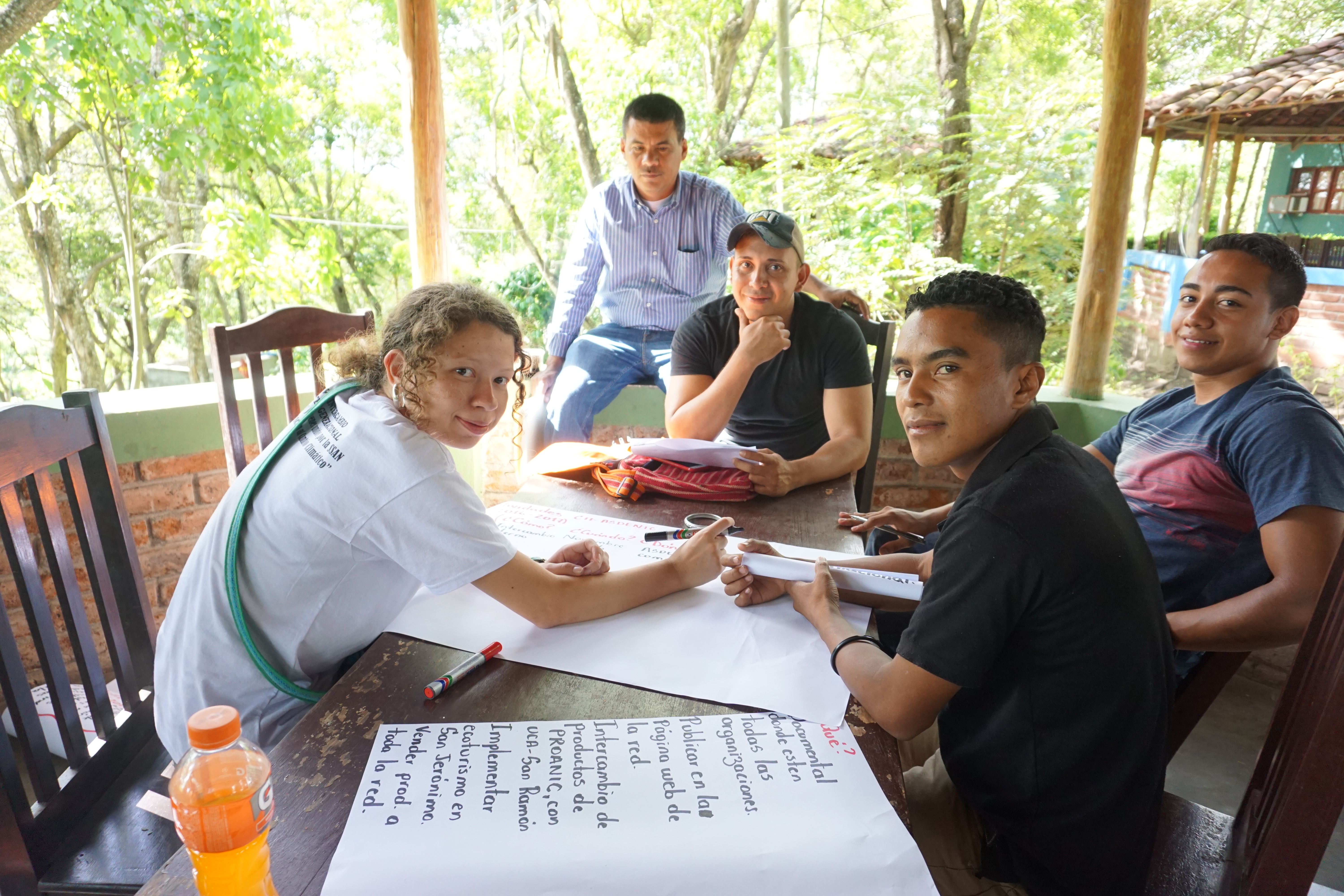
“Women & Youth United for Food Security, Food Sovereignty, and Climate Change Adaptation” | 6th Annual International Youth Exchange for Food Security & Sovereignty
“This network [and these Youth Exchanges] are a source of support for us to not feel alone. A bridge so that we don’t get stuck doing the same thing. !No somos ‘agri-locos’! (We are not agri-crazies!)” cheerfully proclaimed Amy Cruz, a student from the Nicaraguan National University in Jinotega who