Our previous newsletter took a look at how Covid-19 has exposed the injustices of our global food system, and how CAN and its partners are working creatively to stay connected, informed, healthy, and fed through mutual care of the land and each other. Here we examine Covid-19’s impact on the coffee supply chain, especially coffee farmers, and what this means for AgroEco® Coffee.
Covid-19 and AgroEco® Coffee Consumption
The International Coffee Organization’s report on Covid-19 predicts that tightening borders, forced changes in consumer practice, and a 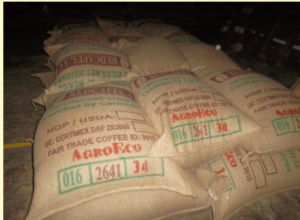 looming recession could reduce global coffee demand by over 200 million pounds. This loss will be devastating for small coffee farmers. In conventional coffee supply chains, large buyers and distributors can leverage their power to shift the risk of uncertain times onto coffee producers. Adding insult to injury, they purchase less coffee and at a lower price. Farmers who have already invested their resources to produce this year’s coffee supply must absorb the loss. Covid-19 has shown us the critical need to develop nimble supply chains based in solidarity that work to address the needs of producers and consumers, not corporate shareholders. AgroEco® Coffee is just this—a solidarity supply chain where everyone involved is committed to sharing risk in difficult times.
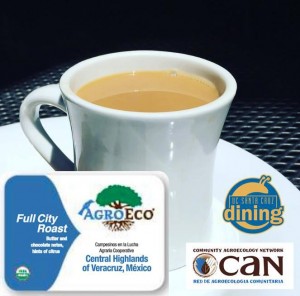 with the campus shut down, the daily brewing in the dining halls also ended. A vital link in CAN’s AgroEco® Coffee supply chain has been shut down. With no sales to UCSC Dining during the spring and summer 2020 campus closure, and with fall 2020 still an unknown, we have lost sales of approximately 6,000 pounds of coffee.
- Can you help us reach a larger market? Do you have contacts with local retailers and/or cafes?
- How about setting up a local coffee buyers’ group in your neighborhood and having friends and neighbors make group purchases online from SCCRC? This can help you save on shipping.
- Do you work with organizations or businesses that would like to serve AgroEco® Coffee to their employees? Find out about wholesale purchases.
Impact on Coffee Producers

AgroEco® Coffee farmer Gisela Palma Illesca chats with customers at Santa Cruz Coffee Roasting Company.
Coffee is produced once a year. If there is no market for the coffee, the most direct impact will be on small coffee farmers. AgroEco® Coffee farmers are just rebounding from the impact of la roya, a fungal disease that devastated coffee farmers in Central America and Mexico. They have worked diligently to develop healthy soils that can better resist the disease. A loss of coffee sales will be devastating to these farm communities. If producers can’t keep growing coffee, there is no coffee supply chain.
AgroEco® Coffee’s Unique Trade Model
CAN developed AgroEco® Coffee in collaboration with small-scale coffee farmers in Mexico and Central America, farmers’ organizations,

AgroEco® Coffee farmers Gisela Palma Illesca and Briseida Venegas Ramos visit Santa Cruz Coffee Roasting Company.
researchers, coffee roasters, and importers to ensure higher returns to farmers, agroecological farming practices, and community empowerment.


